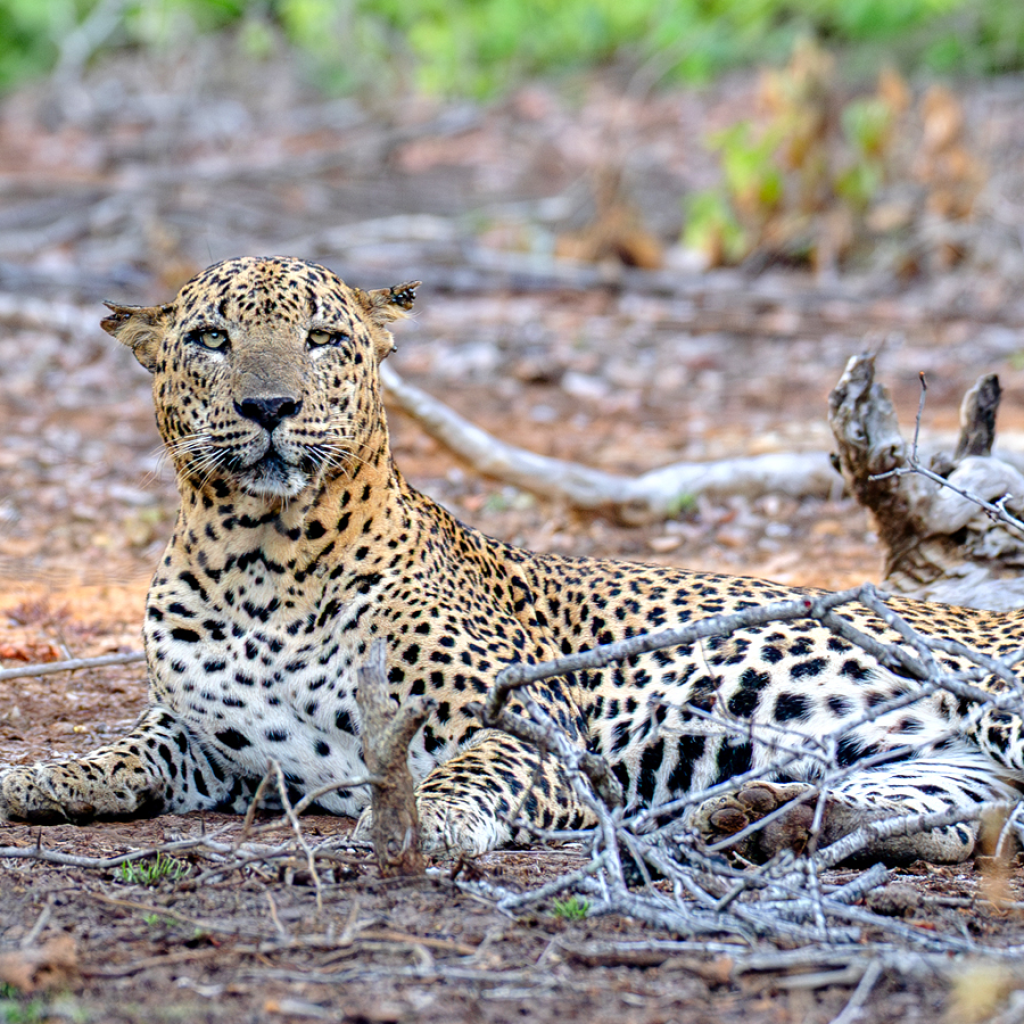
In the sun-baked wilderness of Yala National Park, a young leopard steps cautiously through the thorny scrub. He is Nilame — known to researchers as YM61 — a rising contender in one of the most competitive landscapes on Earth.
First documented in 2021 as a small cub beside his mother, Sandy (YF07), Nilame’s early life unfolded in the shadows. Like many young leopards, he learned quickly that survival depends on patience, silence, and instinct. For months, he remained elusive — a fleeting shape slipping through dappled light — rarely seen, seldom photographed.
By late 2022, subtle changes began to emerge. Nilame started appearing more often around Maila Wala and Koma Wewa, cautiously testing the boundaries of independence. Through 2023, his confidence grew. Regular sightings across Maila Wala, Kaluwara Bokkuwa, and surrounding territories revealed a young male honing the skills needed to survive alone.
But in the wild, growing up means facing rivals.
By early 2024, Nilame ventured further, edging toward Kotasiyabala — a region ruled by powerful males. Here, dominance is not given; it is fought for. An encounter in April with the formidable Pan Wala Male left Nilame with scars etched across his face — lasting reminders of the brutal contests that shape a leopard’s destiny.
Yet resilience defines him. On 11th October, observers recorded a rare moment at Diganwala: Nilame and Lucas feeding from the same kill — a fleeting truce in a world usually governed by conflict.
Photographs captured across months — from June and August to October and again in January — reveal a remarkable transformation. The youthful cub has become a battle-tested wanderer, each mark telling a story of endurance.
In Yala, the wild is a battlefield. Only the strong, the patient, and the wise endure. And Nilame’s journey — still unfolding — is a testament to the relentless struggle for survival in one of Asia’s great wildernesses.